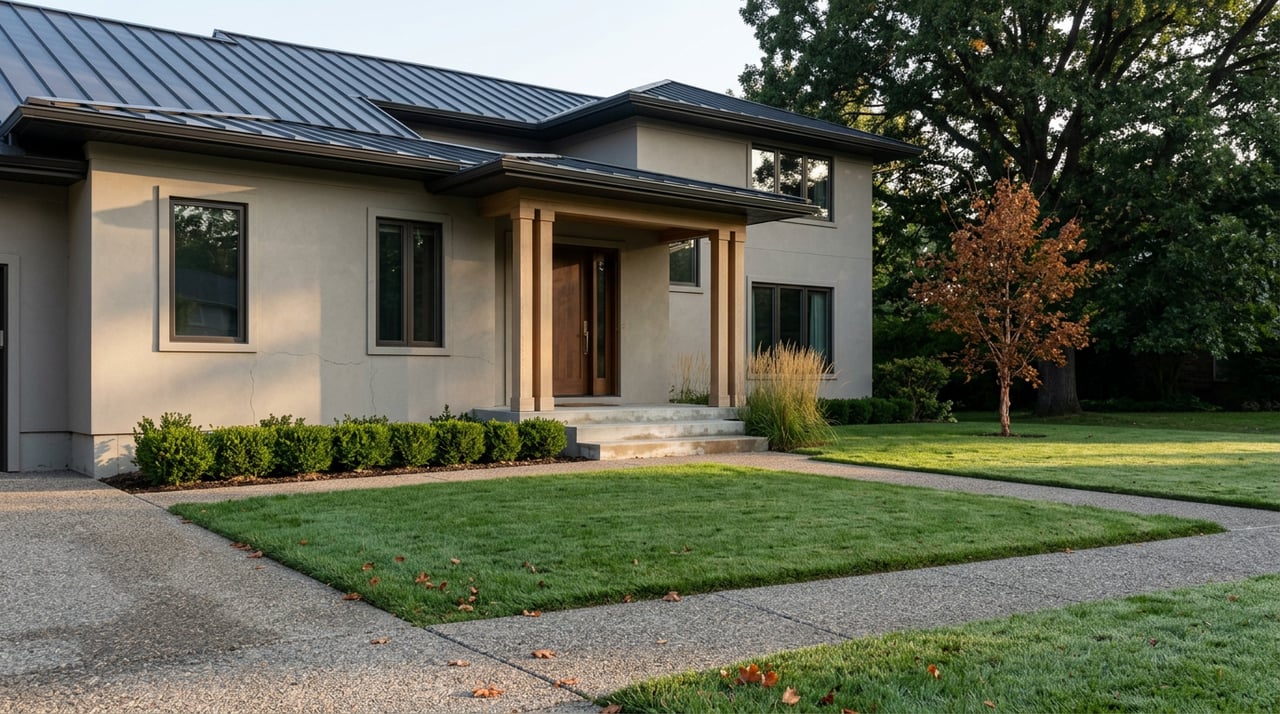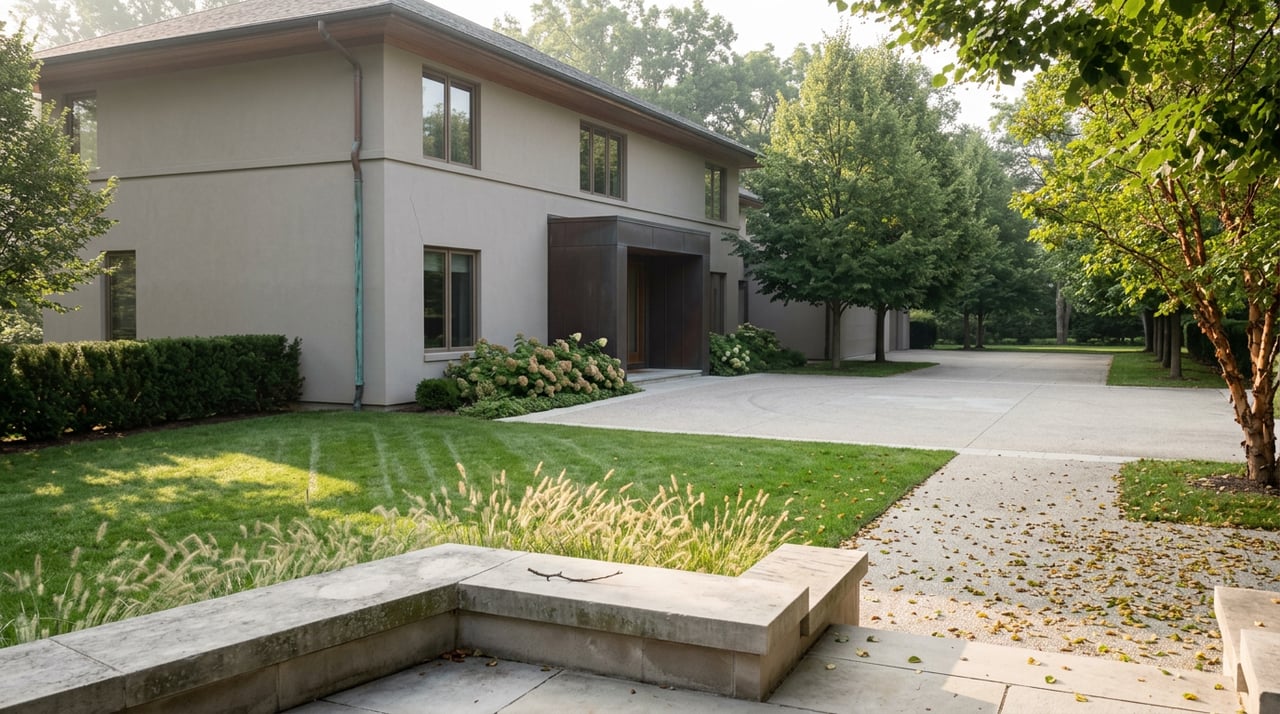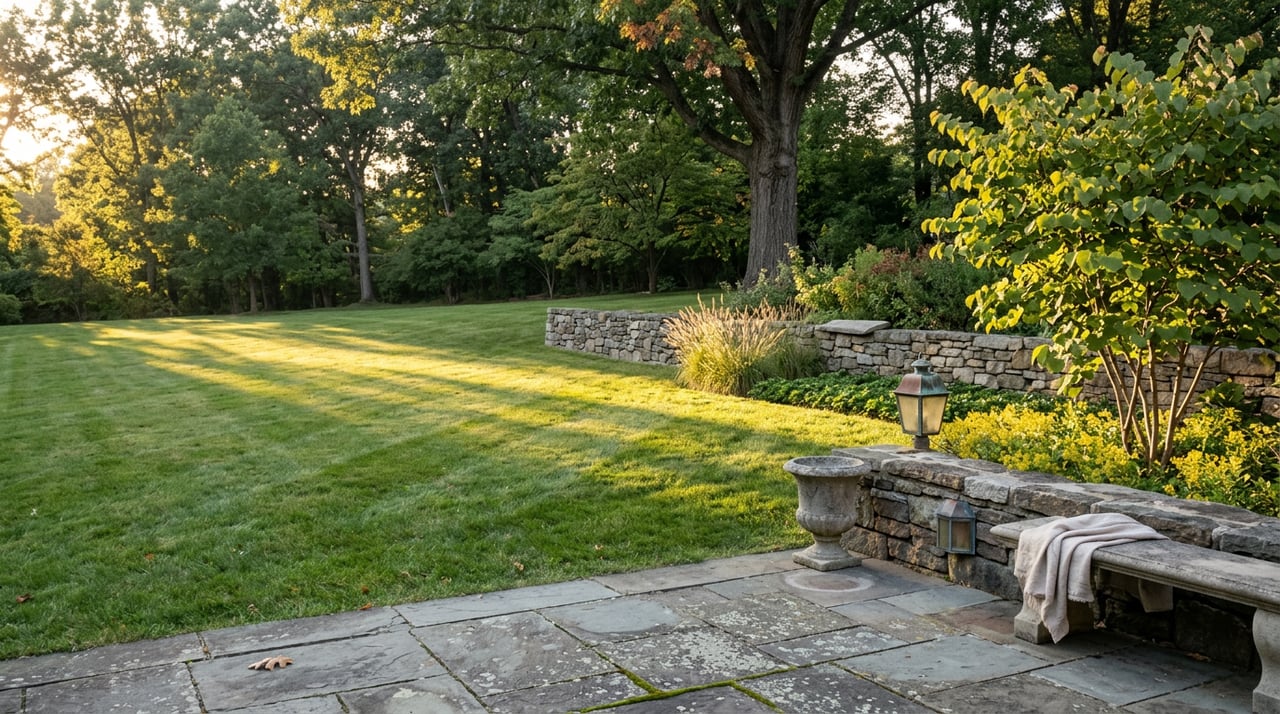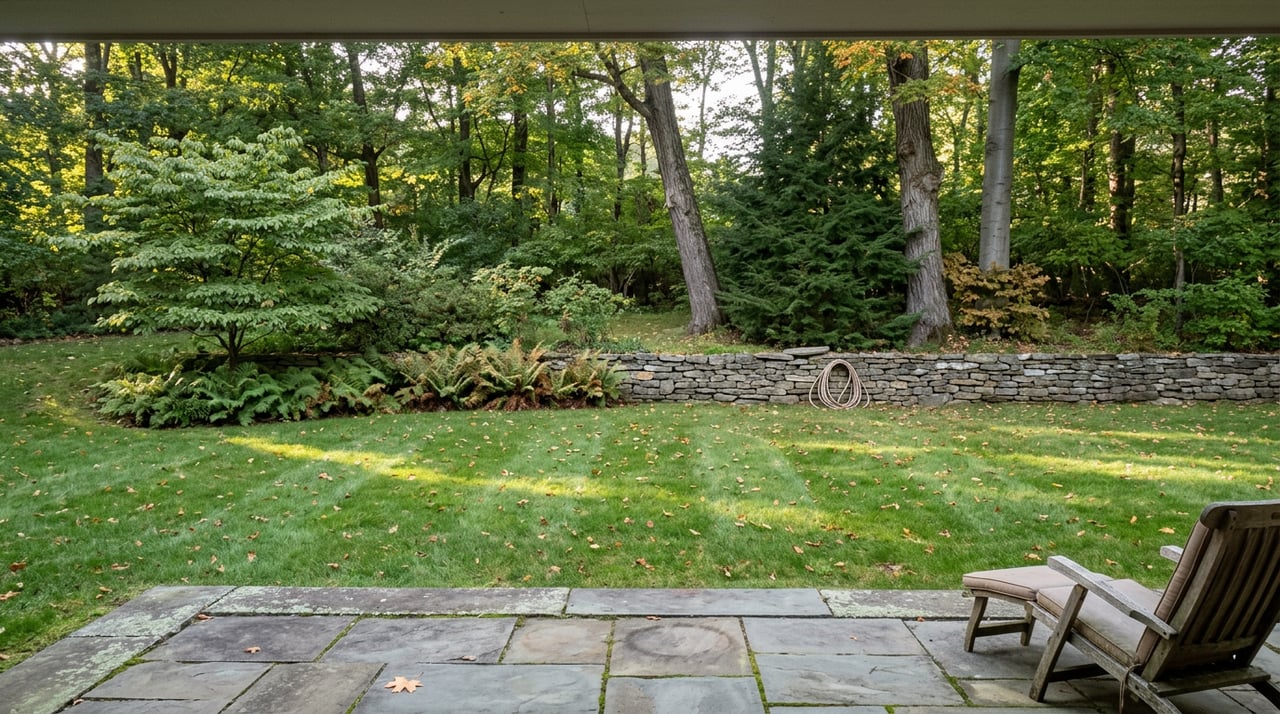
A buyer competing for an estate lot in St. Andrew-Windfields waives the conditions on their offer. The listing called out ravine frontage along Windfields Park as a selling point, and in a multiple-offer situation, few buyers ask their lawyer to slow down and check what that frontage actually restricts. Six months later, they call an arborist about a leaning tree near where they want to put a pool, and learn the tree sits inside a protected area that answers to two different governments, not one.
That gap between what a ravine lot promises and what it permits is the thing worth understanding before you write an offer on one, not after.
What "Backs Onto Ravine" Actually Triggers
Many of the larger lots in St. Andrew-Windfields, and in the neighboring Hoggs Hollow area that shares the same section of York Mills, sit along the ravine valley that carries Wilkett Creek, a tributary of the Don River, through Windfields Park. It's common to see these properties marketed with exact ravine dimensions, sometimes well over an acre of tableland and slope, because that frontage is part of what makes the lot valuable.
It's also what makes the lot regulated. Under Toronto Municipal Code Chapter 658, the Ravine and Natural Feature Protection Bylaw, a permit is required to injure or remove a tree, dump or place fill, or alter the grade of land anywhere inside a mapped protected area. The bylaw doesn't care whether the work is a landscaping project or a full addition. Grading a flat spot for a pool cabana counts. So does cutting back roots to pour a new footing.
A Second Agency With Its Own Buffer
Here's the part that catches most buyers off guard. The City's ravine bylaw is not the only approval a ravine-adjacent property needs. The Toronto and Region Conservation Authority, known as the TRCA, regulates development independently within a buffer from the stable top of slope, the toe of slope, and the regulatory floodplain along the same watercourses. A City staff report for a property on York Mills Road, in the same TRCA-regulated corridor that runs past Windfields Park, laid out the mechanics directly: TRCA policy generally does not permit new development within a ten metre buffer of the greater of the long term stable top of slope or bank, the stable toe of slope, or the regulatory floodplain. That buffer is measured separately from whatever line the City's own bylaw map draws, and a TRCA permit is a distinct application with its own review.
Two agencies, two applications, two sets of technical requirements, all triggered by the same backyard.
| Authority | What it regulates | Typical trigger on a ravine lot | What you submit |
|---|---|---|---|
| City of Toronto, Ravine and Natural Feature Protection Bylaw (Chapter 658) | Trees, vegetation, and grade change inside a mapped protected area | Removing or pruning a tree, building a retaining wall, regrading for a pool or addition | Tree inventory, tree protection plan, grading and drainage plans, and in some cases a geotechnical report |
| Toronto and Region Conservation Authority (TRCA) | Development within a buffer of the stable top of slope, toe of slope, or floodplain | Any new structure or grade change within roughly 10 metres of the slope line along a watercourse like Wilkett Creek | A separate TRCA application, often with a slope stability assessment |
Neither approval substitutes for the other. A permit from the City does not mean the TRCA has signed off, and vice versa.
What Changes on September 1
This matters more this year than it did a few years ago. The City's Tree Bylaw review takes effect on September 1, 2026, and the amendments apply to both the Private Tree Bylaw and the Ravine and Natural Feature Protection Bylaw at the same time. Two changes stand out for a ravine-lot owner. Trees planted as compensation for a previous removal will now require a permit before they can be touched, regardless of size, closing a loophole where young replacement trees had no protection of their own. And stump diameter of 40 centimetres or more can now be used as evidence when a removed tree's trunk can no longer be measured, which makes it easier for the City to build a case after the fact rather than only at the time of removal.
Council has also endorsed, in principle, lowering the minimum protected diameter on private property from 30 centimetres to 20 centimetres, though that change is pending further analysis and a report expected in 2027. If it moves forward, a meaningfully larger share of the mature trees on a typical St. Andrew-Windfields lot would fall under the bylaw than do today.
The Enforcement Case That Made This Real This Spring
None of this is theoretical. In April 2026, CBC News reported that Toronto police and city staff were investigating the removal of three mature evergreens without a permit on Glenrose Avenue, in the St. Clair Avenue East and Mount Pleasant Road area, a different part of the city than St. Andrew-Windfields but governed by the identical bylaw regime. The ward councillor didn't mince words about why this keeps happening.
"There is a pattern of people cutting down trees without permits."
Her point was that the financial upside of clearing a lot ahead of a build can outweigh the fine, which is exactly why the City is tightening the rules this year rather than leaving them as they were. Fines for an unpermitted removal already run from $500 to $100,000 per tree, calculated using the tree's appraised value, species, and condition. For a mature specimen on a ravine lot in St. Andrew-Windfields, that appraisal number is not going to land at the low end of the range.
Before You Waive Conditions
If you're bidding on a lot that backs onto Windfields Park or any other ravine feature in the area, the due diligence period is the only point in the transaction where you have real leverage to find out what you're buying.
- Look up the property on the City's Ravine and Natural Feature Protection map before you write the offer. The map tool lets you search an address directly and see whether the lot falls inside a mapped protected area.
- Ask the seller's agent whether any existing pool, deck, retaining wall, or addition near the ravine edge was built under a permit, and ask for the permit numbers.
- If you're planning any work near the slope, budget for two separate professional reports: a tree inventory and protection plan for the City application, and a slope stability assessment if TRCA's buffer applies to your plans.
- Confirm with your lawyer whether the property's tax roll shows any outstanding Contravention Inspection Fees tied to past bylaw work.
- Treat the ravine survey and TRCA screening as a condition of the offer, not a post-closing task, especially in a competitive bidding situation where the instinct is to strip out every condition.
What Unpermitted Work Costs a Seller
The same mechanics apply in reverse if you're the one selling. If Contravention Inspection Fees from a past violation go unpaid for 90 days after an Order to Comply is issued, the City adds that amount directly to the property's tax roll. That shows up in a tax certificate during a buyer's due diligence, and it's the kind of detail that stalls a closing or triggers a price adjustment at exactly the point in a deal when neither side wants a surprise. If a previous owner cleared trees or regraded near the ravine edge without a permit, it's worth resolving that before the property goes to market rather than letting a buyer's lawyer find it first.
A Few Questions Worth Answering Directly
Does a lot have to physically touch Windfields Park to be regulated? Not necessarily. The protected area and the TRCA buffer are both drawn from mapped slope and watercourse lines, which can extend onto a property well before the rear fence.
What if the tree I want to remove is already dead? A dead or hazardous tree can qualify for a more direct permit path, but the City still requires an application and documentation. Removing it first and explaining later is treated the same as any other unpermitted removal.
Can I check this before I make an offer, or only after? Before. The City's online mapping tool lets you search a specific address against the Ravine and Natural Feature Protection boundary, which is the fastest way to know what you're dealing with before conditions come off.
None of this makes a ravine lot in St. Andrew-Windfields a poor choice. It makes it a lot where the value and the paperwork arrive together, and where the buyers who ask the right questions during their conditions period end up in a much stronger position than the ones who find out later. If you're weighing an offer on a ravine-adjacent property, or getting one ready to list, Bryan Lim can walk through what the site-specific permitting picture looks like before you're past the point of asking. Let's connect.